
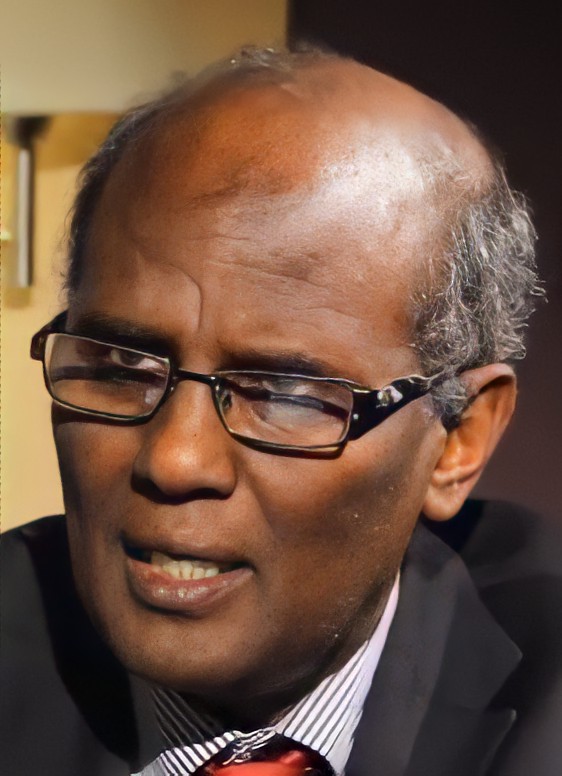
Kenya's fintech founders spend enormous energy cultivating relationships with the handful of legacy bank executives who control API access, correspondent accounts, and settlement terms. When one of those executives — the person who spent 32 years shaping Absa Bank Kenya's institutional posture — walks out one door and into a competitor's CEO chair within the same business day, the calculus for every startup in that ecosystem shifts immediately.
Abdi Mohamed's departure from Absa Bank Kenya after a 32-year tenure as chief executive, and his near-simultaneous appointment as the next CEO of I&M Group's Kenyan banking business, is not a routine executive shuffle Source: TechCabal. It is a consolidation of relational capital — the kind that determines which fintech gets a sandbox partnership and which gets a compliance rejection letter.
The timing compounds the significance. Moody's chose this same window to endorse Absa Group's plan to increase its stake in its Kenyan subsidiary, framing the move explicitly as an East Africa growth play Source: Business Day. That endorsement signals institutional confidence that Absa intends to deepen its Kenyan footprint — not retreat from it. The two banks are now preparing to compete more aggressively in the same market, each anchored by a credible institutional narrative: Absa with Moody's-backed capital expansion, I&M with the executive who built Absa Kenya's relationships from the ground up.
For early-stage fintech founders across Kenya, Uganda, and Tanzania — markets where cross-border payment rails frequently run through Nairobi's banking corridors — the practical concern is this: does Mohamed's move concentrate too much institutional decision-making power in too few hands? Kenya's banking sector is not large. The executives who approve banking-as-a-service agreements, set API pricing, and negotiate KYC pass-through arrangements form a narrow professional network. When a single figure of Mohamed's tenure migrates between the two institutions most likely to compete for fintech partnerships, it raises a legitimate structural question about market access.
Whether I&M's appointment of Mohamed is a deliberate strategic counter to Moody's validation of Absa's expansion ambitions — or simply opportunistic talent acquisition — is not yet clear. What is clear is that I&M has acquired something more valuable than a CEO: it has acquired the institutional memory and relationship architecture that Absa Kenya spent three decades building. Every fintech that had a working relationship with Mohamed at Absa must now decide whether that relationship transfers to I&M, and whether Absa's new leadership will treat inherited fintech partnerships as assets to retain or obligations to renegotiate.
Africa's $50 billion payments evolution, already restructuring the continent's financial infrastructure, depends disproportionately on a functioning interface between legacy banks and digital-first startups. In Kenya — home to M-Pesa's global template and a fintech ecosystem that ranges from Nairobi-based neobanks to cross-border remittance operators — that interface runs through exactly the kind of senior executive relationships that Mohamed now carries to a new institution.
The structural driver here is not executive ambition. It is the intensifying competition between traditional banks for fintech partnership revenue as digital payment volumes scale. Both Absa and I&M are repositioning for a Kenya in which banking infrastructure is a platform business, not just a balance sheet. That repositioning concentrates strategic decision-making at the top — and leaves fintech founders negotiating with institutions whose internal priorities are in active flux.
The founders who move fastest now are the ones who secure clarity on existing partnership terms before Mohamed formally transitions, and who build redundancy into their banking infrastructure relationships before the competitive repositioning between Absa and I&M crystallises into new, less flexible terms. In a market this concentrated, waiting for the dust to settle is not a strategy — it is a queue.